How to Choose and Run a Private Cheat Without Breaking It
What separates a well-run private cheat from one that gets an account flagged, and how to set one up without breaking it.
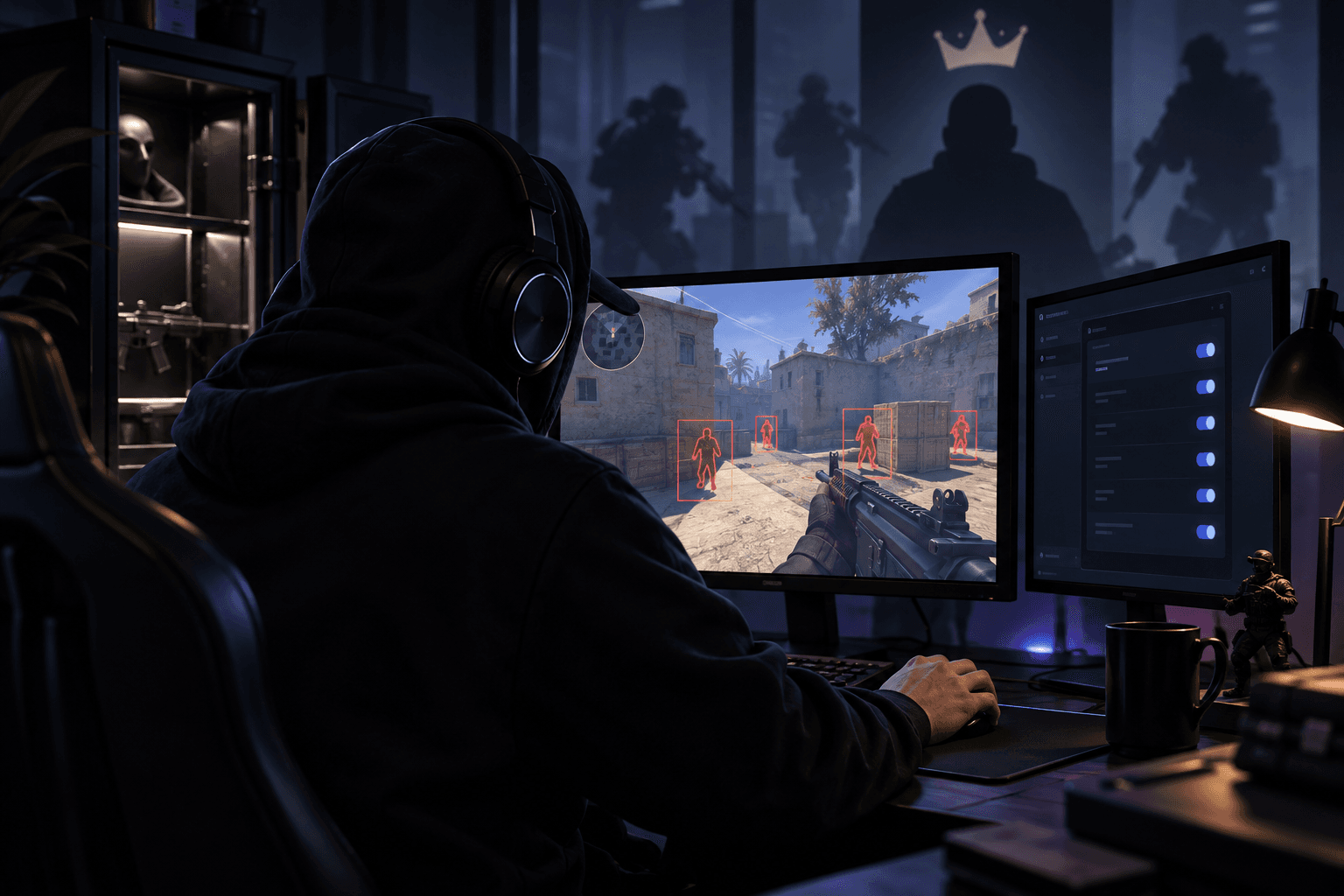
Most cheat-related bans don't come from a bad product, they come from a mismatch between the cheat and how it was set up or used. Choosing well and running it correctly matters more than picking the “best” cheat on paper.
What actually separates private from public cheats
Public cheats are distributed to hundreds or thousands of buyers through the same build, which means anti-cheat vendors get far more samples to fingerprint. Private cheats limit distribution and rotate builds more often, which is the entire reason they cost more and get detected less.
“Private” isn't a guarantee by itself, only a distribution model: how a seller manages updates and access control determines whether that advantage actually holds.
What to check before choosing one
Update cadence tied to the game's actual patch schedule, not a fixed monthly release regardless of what changed on the anti-cheat side.
A feature set matched to what's actually needed: a full aim, ESP, and radar loadout is more surface area for detection than the two features a player will realistically use.
Compatibility with the specific anti-cheat the target game runs — EAC, BattlEye, and Vanguard aren't interchangeable, and a cheat built for one doesn't automatically work safely against another.
Clear setup documentation instead of a support ticket being the only way to get it running.
Common setup mistakes that cause bans
Running the cheat and the game under mismatched privilege levels (one elevated, one not) can itself look anomalous to a kernel-level anti-cheat.
Ignoring a required update and continuing to play on an outdated build after the anti-cheat vendor has pushed a patch.
Enabling every available feature at once rather than the two or three actually being used, which increases both statistical flags and file footprint.
Disabling the loader's own safety checks or security software specifically because it's flagged as a false positive, without confirming that's actually what triggered it.
FAQ
Does a more expensive cheat mean a longer detection-free run?
Generally correlated, since it usually reflects tighter distribution and faster updates, but it isn't guaranteed for any specific account or timeframe.
Is it safer to use fewer features?
Yes, on the whole: a narrower feature set gives both signature scanners and behavioral analysis less to flag.
The choice of cheat matters less than most buyers assume — how closely the setup and usage match the seller's actual guidance is what tends to decide the outcome.